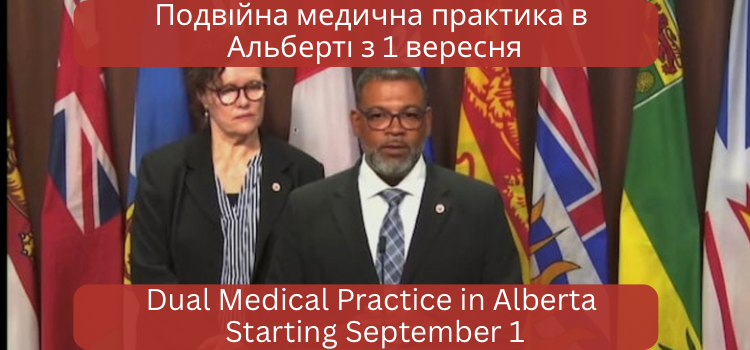
Changes will come into effect in Alberta on September 1, 2026, allowing individual doctors to work in both the public and private health care systems. The new model, which Bill 11 (Health Statutes Amendment Act, 2025 (No. 2)), sparked heated debate between the Alberta government, medical organizations, and federal authorities.
According to the province, interest in the new system is already significant: over the summer, Alberta received almost 400 expressions of interest from doctorswho are considering the possibility of dual practice.
What's changing from September 1
Bill 11 was introduced and passed by the Alberta Legislature in the fall of 2025. It creates a mechanism whereby physicians who meet established criteria will be able to apply for employment simultaneously in two systems:
• state, where medical services are paid for through the public healthcare system;
• private, where the patient can pay for certain services themselves.
At the same time, this does not mean that from September 1, doctors will automatically start accepting patients in two systemsFirst, they must obtain the appropriate government permission.
The formal application process, according to the province, is set to begin in mid-September 2026, and operations under the new model will likely only begin later in the fall.
Who will be able to work in two systems?
To obtain a dual practice permit, physicians must meet criteria set by the province.
In particular, they must work a certain number of hours in the state system. When considering applications, the government will also verify compliance with the requirements for hours of work in the state surgery, monitoring and the new reporting system.
Important clarification: family doctors are currently not allowed to work in both the public and private systems simultaneously.


Almost 400 doctors have already expressed interest
Madison Mackie, a spokeswoman for Alberta's Minister of Hospital and Surgical Services Adriana LaGrange, told CBC News that the provincial government is reviewing almost 400 expressions of interestreceived from doctors during the summer.
These are not yet official applications for dual practice. According to the government, this preliminary stage is intended to help determine the level of interest, understand which professionals are considering this format of work, and prepare for the formal application process.
Medical organizations oppose
The Canadian Health Coalition and other Canadian and provincial medical organizations are calling on the federal government to intervene and prevent the dual practice model from being implemented in Alberta.
Canadian Health Coalition Chair Jason McLean called Bill 11 the biggest threat to the health care system since its passage Canada Health Act in 1984.
He believes that allowing doctors to work in both the public and private systems could divert some medical resources to the private sector. Opponents of the reform fear that this could lead to longer waiting lists in the public system and unequal access to healthcare.
McLean also called on federal Health Minister Marjorie Michel to intervene before other provinces begin considering similar changes.
Protests across Canada
Canadian Health Coalition plans to hold promotions at 30 locations across Canada on September 1 within its Day of Action.
After that, in the fall, the organization plans to hold another 50 town hall meetings as part of a nationwide campaign against Bill 11.
Thus, the discussion around changes in Alberta is already going beyond the province itself.
What is the Alberta government responsible for?
The Alberta government rejects claims that the province is moving toward the American model of health care.
Madison Mackie called the Canadian Health Coalition's concerns "fear-mongering" and said the province's position is that the dual practice model does not violate the Canada Health Act.
The government emphasizes that its priority remains a strong public health care system and ensuring that Albertans do not have to pay out of pocket for medically necessary care.
The province's position is that dual practice has give patients more choices, rather than replacing or weakening the state system.
What is the federal government's position?
Federal Health Minister Marjorie Michel has previously expressed concerns about Bill 11.
At the same time, the federal government has not yet announced its intention to stop the changes. Federal government spokesman Alexandre Bergeron said that Ottawa is working with Alberta and is conducting targeted negotiations on implementing the new model.
The federal side says its goal is to ensure access to medically necessary care, protect the core principles of the state's universal system, and make sure the changes are consistent with Canada Health Act.
The federal government has also revised relevant regulations and ministerial order of June 18Ottawa remains in contact with the province to minimize possible negative impacts on the public system.

What this means for Albertans
At this stage for most patients nothing changes all at once on September 1st.
This is the date when the legislative changes will come into effect, but doctors still need to go through the licensing process. Official applications are expected to be submitted in mid-September, and the actual start of dual practice surgeries is expected later in the fall.
It is also important to understand that the model does not apply to all doctors. Family doctors are currently excluded from the dual practice system.
Let's summarize
Alberta is moving to a new format that will allow individual doctors to work in both the public and private systems once they are licensed. The province has already received almost 400 preliminary expressions of interest.
The Alberta government says the changes will expand patient choice and not weaken the public system. Health organizations, on the other hand, fear a drain of doctors and resources to the private sector and longer waiting lists for those using public health care.
The federal government has not yet announced its blocking of the reform, but is continuing negotiations with Alberta and ensuring that the new model complies with the principles of the Canada Health Act.
Therefore, the key question now is not only whether How many doctors will choose dual practice?, but also in how its implementation will actually affect the availability of public health care in Alberta.
